The lynching of Jesse Washington on May 15, 1916, remains one of the most horrific and Well Documented Lynchings in American history. It took place in Waco, Texas, a city that at the time prided itself on being progressive, religious, and civilized. Yet In broad daylight, before a crowd of over 10,000 people, including city officials, police, women, and children, Washington was tortured, mutilated, and burned alive. Later called “The Waco Horror,” the event exposed the shocking brutality of lynching and the public celebration of racial violence in early twentieth-century America.

Jesse Washington was just 17 years old when he was accused of raping and murdering Lucy Fryer, the wife of his white employer, on a farm in Robinson, Texas. Fryer had been found brutally beaten to death in her seed shed. Washington, who had worked on the Fryers’ farm for only a few months, was quickly arrested.
There was no meaningful investigation. He was interrogated without a lawyer or his parents present, and although he initially denied involvement, he later signed a confession under circumstances that many historians believe involved coercion.
Jesse Washington’s trial took place just a week after his arrest, on May 15, 1916, at the McLennan County Courthouse in Waco. From the moment it began, the proceedings were rushed and far from fair. The courtroom was packed with spectators, many eager to see the young boy punished, and even the jury selection was handled hastily, with his inexperienced lawyers offering little to no defense.
Washington, barely able to understand the process, was quickly asked to enter a plea. When he muttered an answer that the court interpreted as guilty, the trial moved forward with shocking speed. Witnesses testified, but much of the evidence was circumstantial, and the coerced confession carried the weight of the case. After only four minutes of deliberation, the jury returned a guilty verdict and sentenced Jesse to death, setting the stage for the horrific lynching that would follow.
Immediately after the verdict, the legal process collapsed. Court officers were pushed aside as members of the crowd rushed forward and seized Washington inside the courtroom. A chain was placed around his neck, and he was dragged through the streets of Waco toward City Hall. Along the way, he was stripped naked, beaten, stabbed, and flogged with sticks and clubs. By the time he reached the public square, he was already severely injured and barely conscious.
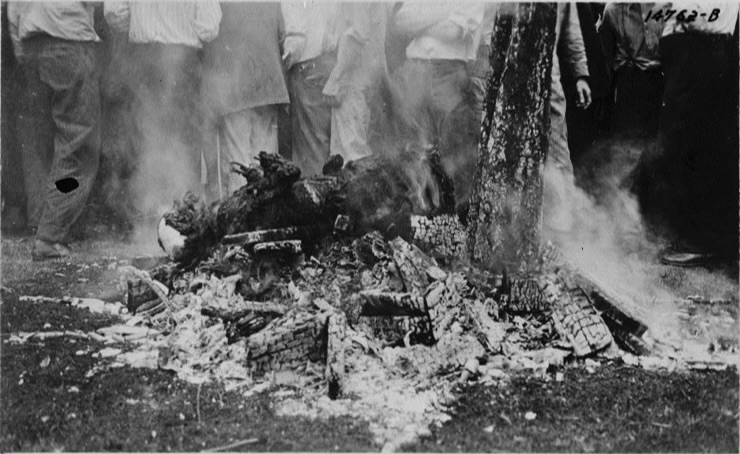
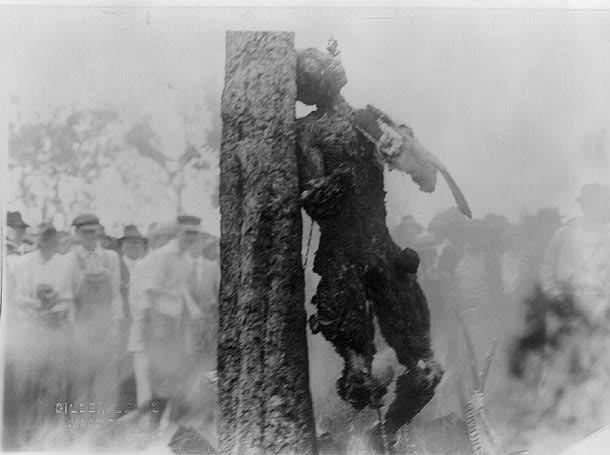
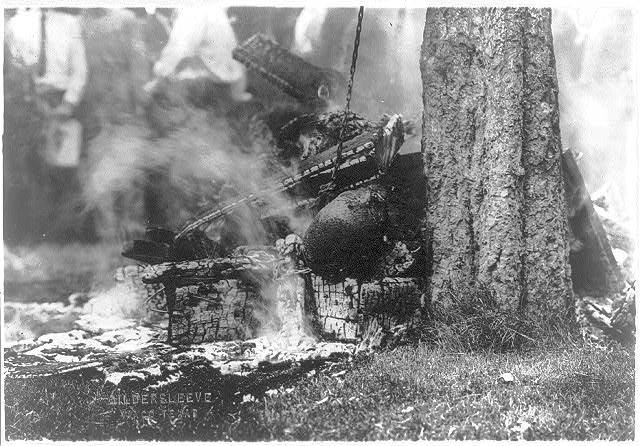
What followed was two hours of deliberate torture. A bonfire had been prepared in advance. Washington was doused in coal oil, hanged from a tree by the chain, and repeatedly lowered into the flames, then pulled back out. Members of the mob cut off his fingers, toes, and genitals while he was still alive. He tried to climb the chain to escape but could not because his fingers had been severed.
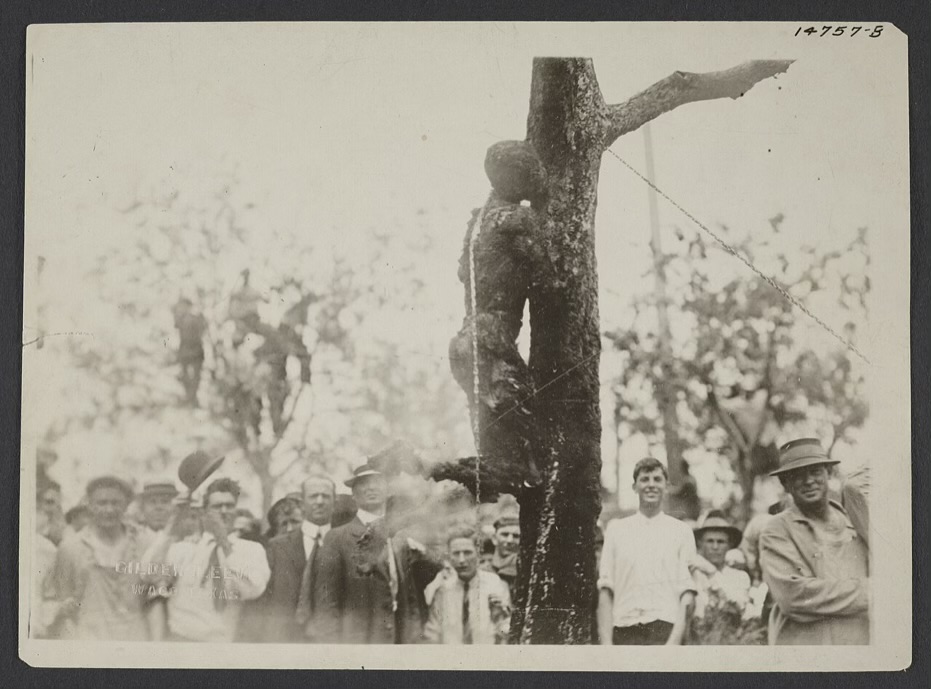
Spectators laughed, shouted, and took photographs as he was slowly burned for two hours. Eventually, his body was reduced to a charred corpse, with parts of his limbs burned away and his skull exposed. Even after death, his remains were dragged through the town and publicly displayed.

An estimated 15,000 people witnessed the lynching, which lasted for two hours. Children were released from school during their lunch break to attend. Vendors sold food. City officials, including the mayor and police chief, were present and did nothing to intervene. Although lynching was illegal in Texas, no attempt was made to stop the mob, and no one was ever arrested or prosecuted.
View the images here; Warning: graphic content
Image 1: Click to View
Image 2: Click to View
Image 3: Click to View
Image 4: Click to View
What made Washington’s lynching especially significant was the documentation. A professional photographer, Fred Gildersleeve, took detailed photographs of the torture and the crowd. These images were later printed as postcards and sold openly in Waco. People posed smiling beside Washington’s burned body. The fact that no one hid their face showed how confident participants were that they would face no consequences.
The reaction outside Waco was surprisingly furious. Newspapers across the United States condemned the lynching as barbaric and shameful. The New York Times wrote that such an act could not occur in any country pretending to be civilized.
Black newspapers were even more direct, describing the mob as savage and morally bankrupt. Civil rights activist James Weldon Johnson went even further, describing those responsible as “lower than any other people who at present inhabit the earth.” Even some southern newspapers, which had often defended lynching in the past, described the event as horrifying and disgraceful.
The National Association for the Advancement of Colored People (NAACP) launched a major investigation. Activist Elisabeth Freeman traveled to Waco, posing as a journalist. She interviewed residents, officials, and witnesses, often facing hostility and suspicion.
Freeman concluded that most white residents supported the lynching, although some were uncomfortable with the extreme mutilation. She also believed that Washington likely killed Lucy Fryer but doubted the rape allegations. Her report, along with Gildersleeve’s photographs, was published by W. E. B. Du Bois in the NAACP magazine The Crisis under the title “The Waco Horror.”
The publication of these images shocked the nation. For the first time, Americans were confronted with graphic visual evidence of a lynching in progress, not just the aftermath. The NAACP used the case as a central example in its anti-lynching campaign, distributing reports to newspapers and politicians. Du Bois argued that such brutality proved that claims of moral and Christian superiority in American society were hollow.
Locally, however, Waco reacted defensively. Some newspapers justified the lynching, claiming Washington deserved his fate and that Black residents should see it as a warning. Others criticized national papers for attacking the city. While a few ministers and educators condemned the act, many officials denied responsibility and claimed only a small group was involved, despite clear photographic evidence of thousands in attendance.
For decades, the city avoided confronting the event. It was not until 2016, exactly one hundred years later, that the mayor of Waco formally apologized to Washington’s family and the Black community. A historical marker was also installed to acknowledge what happened and to condemn the lynching as a crime against humanity.
Historians today see Jesse Washington’s lynching as a turning point in public awareness of racial violence. While it did not end the practice, it exposed its true nature to the wider public and helped shift opinion against mob violence. The photographs of his lynching still circulate in historical archives, not as spectacle, but as a permanent record of one of the darkest chapters in American history.
Sources:
https://www.lynchingintexas.org/bernstein
https://www.tshaonline.org/handbook/entries/jesse-washington-lynching
https://www.hmdb.org/m.asp?m=268784